
Indoor days can be surprisingly hard on dogs.
Bad weather, busy schedules, or apartment living often mean fewer walks — and a bored dog usually finds their own way to stay entertained.
The good news?
Keeping dogs busy indoors doesn’t require more chaos or overstimulation. The right calm toys can encourage focus, relaxation, and mental balance — not wild zoomies.
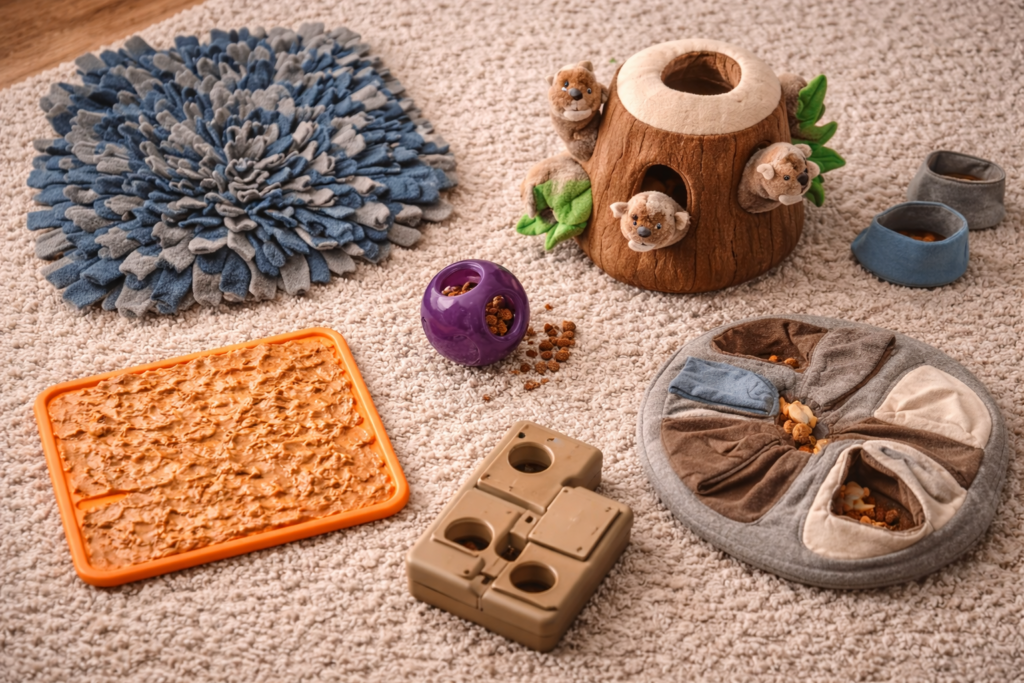
Below are 10 calm and cozy dog toys that help dogs stay engaged indoors without turning your home upside down.
Why Calm Indoor Toys Matter More Than You Think
Many owners assume indoor boredom means their dog needs more physical activity.
In reality, most dogs — especially puppies and intelligent breeds — need mental work that teaches them to slow down.
Calm toys help:
- Reduce restless pacing and barking
- Support emotional regulation
- Encourage independent play
- Prevent destructive behaviors
- Create peaceful indoor routines
Think of these toys as quiet enrichment, not entertainment.
1. Snuffle Mats
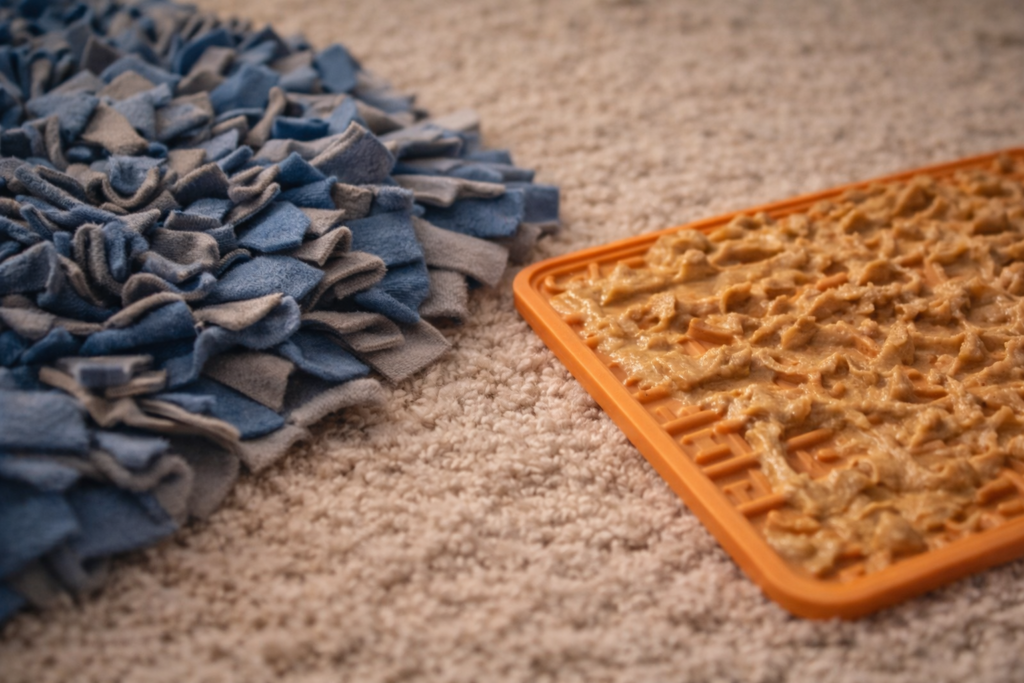
Snuffle mats turn mealtime or treats into a nose-driven puzzle. Dogs sniff, search, and problem-solve at their own pace.
Why they work:
Sniffing naturally lowers a dog’s heart rate and promotes calm focus.
Best for:
Food-motivated dogs, puppies, and anxious dogs.
2. Lick Mats
Licking is one of the most soothing behaviors dogs have. A lick mat spreads soft foods into textured grooves, encouraging slow, repetitive movement.
Why they work:
Licking releases calming hormones and helps dogs self-regulate.
Best for:
Dogs who struggle to settle, post-walk decompression, crate time.
3. Plush Hide-and-Seek Toys
These toys hide smaller plush pieces inside a larger soft toy. Dogs gently remove each piece one by one.
Why they work:
They satisfy natural foraging instincts without overstimulation.
Best for:
Gentle players, puppies, dogs who enjoy problem-solving.
4. Soft Treat-Dispensing Balls
Unlike hard bouncing toys, soft dispensers roll slowly and quietly across the floor.
Why they work:
They keep dogs engaged without triggering chase frenzy.
Best for:
Apartment dogs, evening play sessions, low-noise households.
5. Comfort Plush Toys
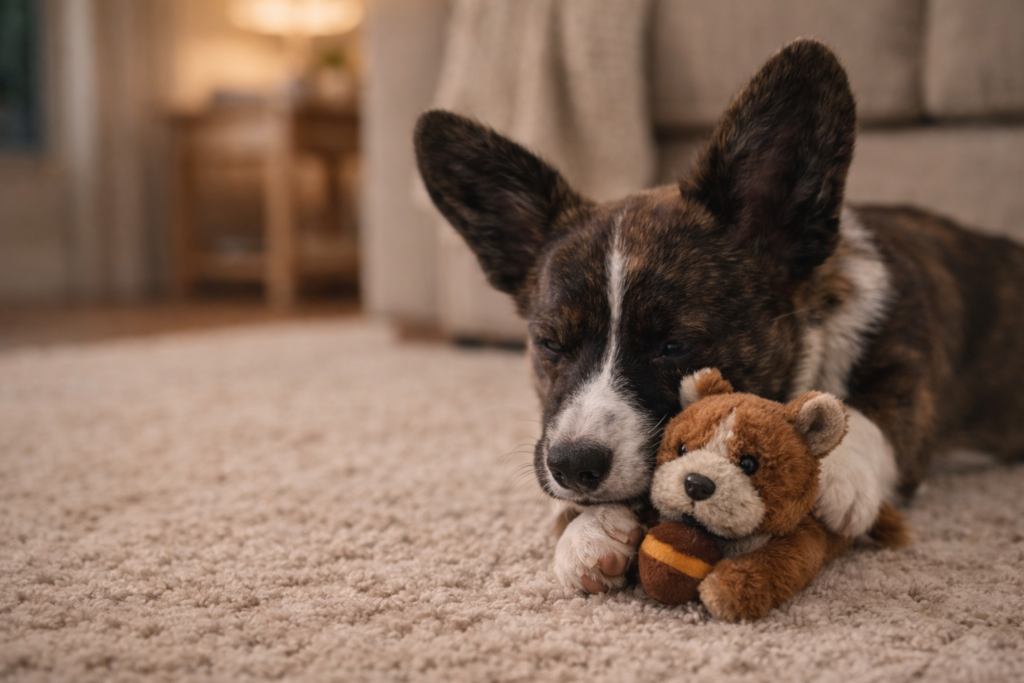
Some dogs don’t need puzzles — they need comfort. A well-made plush can provide security and calm companionship.
Why they work:
Soft textures help reduce stress and support emotional comfort.
Best for:
Puppies, newly adopted dogs, dogs prone to separation anxiety.
6. Frozen Treat Toys
Freezable toys filled with yogurt, pumpkin, or wet food create long-lasting, quiet engagement.
Why they work:
Cold, slow licking naturally encourages relaxation.
Best for:
Teething puppies, hot days, calm crate routines.
7. Fabric Puzzle Toys
Fabric-based puzzles offer hidden pockets, flaps, and folds without hard plastic or loud sounds.
Why they work:
They encourage gentle exploration rather than frantic behavior.
Best for:
Dogs who enjoy figuring things out slowly.
8. Slow Puzzle Boards (Beginner Level)
Simple puzzle boards with sliding covers or lift-up lids teach dogs to problem-solve without frustration.
Why they work:
They build confidence and focus while staying mentally calm.
Best for:
Dogs new to enrichment toys or easily overwhelmed dogs.
9. Quiet Chew Toys
Soft rubber or fabric-reinforced chews allow dogs to gnaw peacefully.
Why they work:
Chewing is naturally grounding and stress-relieving.
Best for:
Evening relaxation, dogs who chew to self-soothe.
10. Scent-Based Enrichment Toys
Toys designed specifically for scent work allow you to hide small treats inside layers of fabric or compartments.
Why they work:
Scent games tire dogs mentally far more than physical play.
Best for:
High-intelligence breeds, rainy days, indoor training routines.
How to Choose the Right Calm Toy for Your Dog
Not every calm toy suits every dog. When choosing, consider:
- Your dog’s play style (gentle vs. intense)
- Noise level (especially for apartments)
- Durability needs
- Food motivation
- Emotional state (anxious, excitable, confident)
Start simple. Calm enrichment works best when dogs don’t feel rushed or overstimulated.
Common Mistakes with Indoor Toys
- Rotating too many toys at once
- Using high-energy toys before bedtime
- Leaving puzzle toys unsupervised initially
- Choosing toys that are too difficult
Calm toys should lower energy, not spike it.
FAQ
What are the best calm toys for dogs indoors?
Snuffle mats, lick mats, plush puzzles, and scent-based toys are among the most effective calm options.
Are calm toys good for puppies?
Yes — calm enrichment helps puppies learn focus and emotional regulation early.
Can calm toys reduce anxiety?
Many dogs find licking, sniffing, and gentle problem-solving naturally soothing.
How long should indoor enrichment last?
Even 10–20 minutes of calm mental work can be very effective.
Should calm toys replace walks?
No — they complement physical exercise, not replace it.
Final Thoughts
A calm dog isn’t a bored dog — they’re a mentally fulfilled one.
Indoor enrichment doesn’t need to be loud, complicated, or exhausting. With the right calm and cozy toys, your dog can stay engaged, relaxed, and content — even on the quietest days at home.